Why Work With Me
“You do not rise to the level of your goals. You fall to the level of your systems.”
Experience trains what you can see.
I did not start with websites. I started by learning to look, and then by learning how people, animals, and businesses actually behave... which turns out to be the same skill, learned three times. That is the part of me you are hiring.
People
Why someone does what they do
I studied psychology at Ole Miss on a scholarship, and I never stopped asking the question. A customer who lands on a website and leaves is doing that for a reason. So is the one who reaches out and then goes quiet.
Animals
Behavior that cannot explain itself
I'm not only a web designer. In 2018, I was working as a canine behaviorist. After working with around a thousand dogs, you stop taking the visible behavior at face value. A dog cannot explain what is wrong, so you learn to read everything around it. Sometimes the behavior is the problem. Sometimes it is only the symptom. The job is knowing the difference.
Systems
How a business actually runs
Later I worked inside a business, and then I built software for businesses: the product, the database, the user flows, the QA. That teaches you to follow a failure across a whole process until you find the handoff that broke, and to fix the structure instead of patching the symptom.
Most specialists see the piece they were hired for.
The photographer sees the photos. The web designer sees the site. The CRM person sees the CRM. The booking consultant sees the software. I follow your customer through all of it, from the first search to the follow-up nobody remembered to send, which is why the problem I find usually sits in the handoff between the pieces... the part no specialist was looking at.
Working with me gives you access to my brain. I see things other people do not. When you are in the middle of your day-to-day, sometimes you cannot see the whole picture clearly. That is my expertise.
I ask the right questions, get to the root of potential problems that may be costing you revenue, and build your customer experience around what I discover. Collaboration is important to me because I cannot authentically capture your business without first understanding it.
Meet the Founder
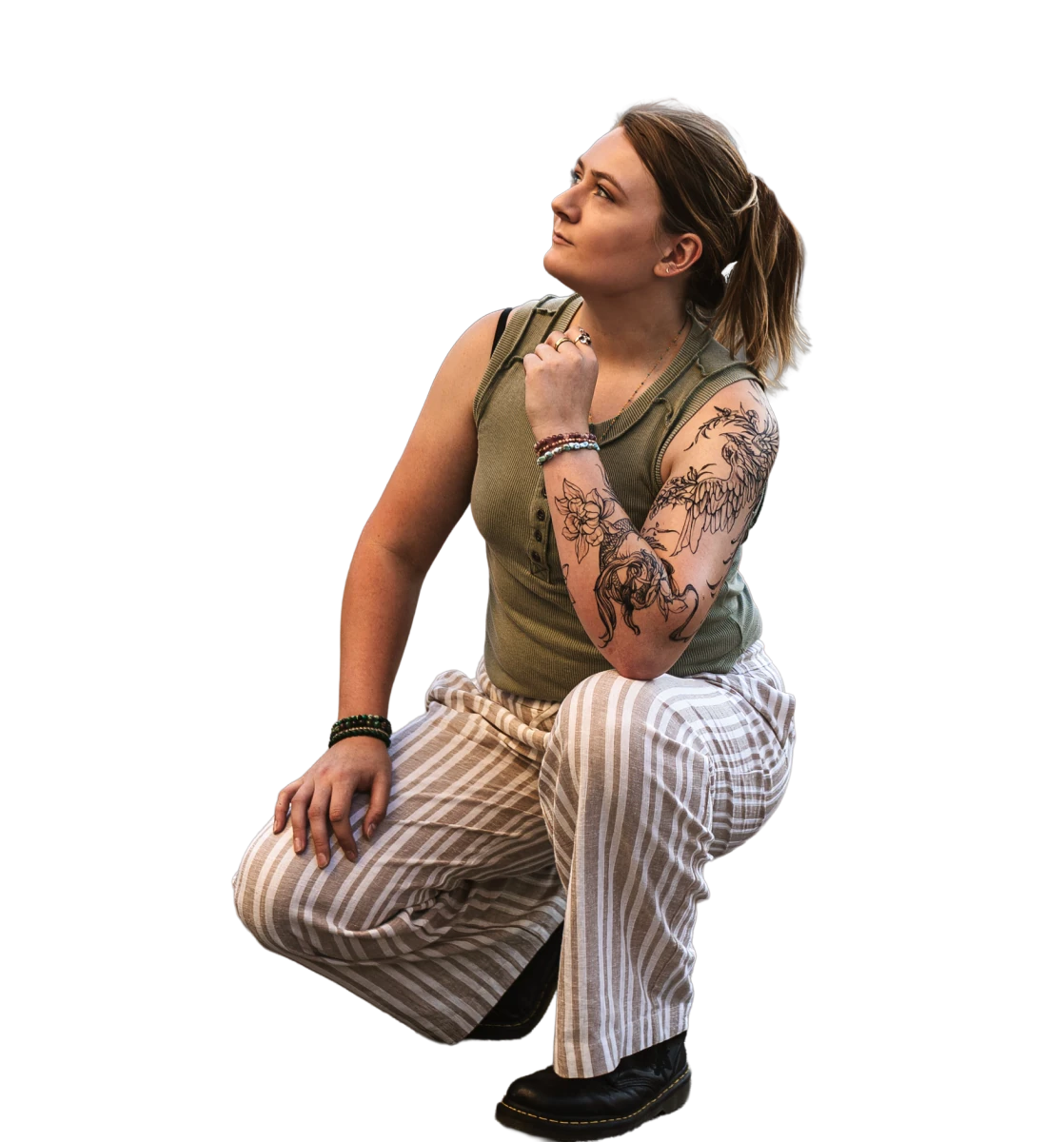
Keena Grisham
Candor + Halo is a creative studio in Chattanooga, Tennessee that brings website design, brand identity, and photography together for service businesses. Keena started it to offer a clearer, more honest way to build a business's public presence — with the words, visuals, and website considered together instead of treated as separate projects.
How I got here
- Age 8
A Nikon Coolpix, then manual mode
I received a Nikon Coolpix for Christmas when I was eight years old. I have always been eager to learn exactly how things work... software, cameras, and eventually entire businesses. That little camera is where it started, and it did not take long before I wanted to challenge myself beyond a digital camera.
So at twelve, I began teaching myself manual mode on the DSLR that sat collecting dust in a closet of my childhood home. I started by photographing my family dogs and editing the photos in Adobe Lightroom and Photoshop. As my knowledge grew, I began photographing any event that I could find.
- Age 14
Keyframe by keyframe
At fourteen, I took an interest in videography and expanded my software knowledge with Sony Vegas Pro. I edited keyframe by keyframe... I have always enjoyed the nitty, gritty details that require lots of patience. I put that patience to work making promotional videos for small equine YouTubers who did not have many followers yet, so their work had a platform to be recognized on. I even mixed my own audio, so the stories filled the viewer with emotion.
- Age 16
My first business, then journalism
All of that practice became my first photography business at sixteen: school dances, family events, pet portraits, and more. Designing my first website for it was exciting. It also taught me some hard lessons... for example, my classmates and photography clients found a way to download my photos without paying for them.
At seventeen, I joined my school's journalism team, and that was when my graphic design skills truly began to blossom. I became the photography editor, sold and created the advertisements, and taught photography classes. It filled me with immense joy to receive nationally recognized design awards, such as Best of the High School Press from the National Scholastic Press Association.
- ChapterThen
Why people do what they do
At Ole Miss I studied psychology on a scholarship. I did not know it at the time, but that was the beginning of the work I do now. I stopped asking what a person did and started asking why they did it, and I have never been able to switch that off.
Around the same time I worked as the social media manager (and trainer) for a local dog-training business. I photographed the client dogs, ran the social media, and used my graphic design skills to create the content.
- ChapterThen
A canine behaviorist's method
Behavior work taught me not to confuse the thing I could see with the thing causing it. Over the years, working with around a thousand dogs made that distinction impossible to ignore. A dog cannot tell you what the problem is, so I had to learn to read everything around it: the environment, the routine, the body language, what happened right before the behavior and what happened right after, how it changed when one variable changed, what the owner believed was going on... and what the animal was actually showing me.
The visible behavior was not always the problem. Sometimes it was only the symptom, and the real cause sat somewhere in the environment, the sequence, or the relationship around it. Different dog, different home, different owner, different visible behavior, and the same principle underneath every one of them. The method stayed the same: observe the whole environment, find the pattern, separate the symptom from the cause, change the right variable, and watch what changes next.
That is one of the trainings I still use with businesses. An owner comes to me saying the website is the problem, or the photos, or people are not booking, or leads disappear, or customers do not come back, or we need a CRM. I do not assume the thing they named is the cause. I look around it. What is the customer seeing? What happened right before this point, and what happens next? Where does information disappear, and where does the handoff break? What is someone compensating for by hand, and what is the customer left to figure out alone? The eye came from photography and the process diagnosis came from operations, QA, and software. The habit of looking past the visible behavior came from here.
- ChapterThen
How the software gets built
So I built some. Software for pet businesses: the product, the database, the user flows, and the QA. Building it yourself teaches you something no amount of using it does. Every failure has a path, and if you follow it far enough you find the handoff that broke... usually between two pieces that were each working fine on their own.
- ChapterNow
All three at once
Somewhere along the way, I started noticing the websites around me. Businesses were paying thousands of dollars for sites that still felt generic... no story, no professional photography, nothing that felt like the actual business. Then AI made websites easier to create than ever, and so many of them began to look interchangeable. I use modern tools myself, so this is not a complaint about technology. It is an observation about what tools cannot do. They cannot understand a brand, photograph it honestly, or make someone landing on a page feel like part of the community already... and that feeling is what actually brings customers in.
More recently, I began teaching myself SEO with the same kind of curiosity I brought to photography and videography. I find it fascinating... and it matters, because generic websites rarely give search engines enough substance to work with. I will never promise rankings. I build websites with real structure, real photography, and a real story, so a business has the strongest opportunity I can reasonably give it.
Candor + Halo exists to bring those pieces together: the eye from photography, the way of watching from psychology and the animals, and the way of diagnosing from the systems.
Something I keep seeing
Many businesses today use AI, particularly ChatGPT for their business graphics.
I see it when I'm driving on the road, on social media... and it saddens me.
Not because I'm against using a cheap resource, but because I feel like owners do not realize how it directly impacts the integrity of their business.
What all of that turned into
The teaching never wore off
I taught photography classes at seventeen, and I never stopped teaching... clients, dog owners, anyone who asked a good question. I'd rather explain why something matters than hope you don't ask, so you will always hear the reasoning behind my recommendations.
The pieces stopped being separate a long time ago
At the dog-training business, I was the photographer, the writer, and the designer for every piece of content. That is what made the work good: nothing was handed off, and everything pointed at the same story. Your project works the same way. The pictures, the words, and the design are decided together, by one person who knows your business.
The agreement remembers what I learned at sixteen
I know what it feels like to watch your own work get taken. So every Candor + Halo agreement spells out scope, cost, and ownership in writing before anything is signed... what's included, what isn't, and what belongs to you afterward. Nobody should have to wonder.
The questions come before the design
I am not interested in making your brand look generic... I want your website and photography to look like YOUR company. So before I design anything, I ask what the work has to do: who needs to find you, what they need to understand, and what should happen next. Anyone can make a basic website, but not many people can make your website feel like a premium homebase.
Who I am most passionate about helping
I'm not just a website designer or photographer... I am a creative storyteller at heart, and an educator by nature. And the businesses I most love telling stories for are family-owned and operated, because they put their heart and soul into making customers feel special.
Of course, some people will always choose the lower price, and a corporation can offer discounts a family business cannot match. I understand that. But a locally owned business should not have to compete on price alone... the care, the character, and the relationships behind it are part of its value. Most of the time, those things simply are not visible online yet.
That is why I am on a mission to bring these businesses' stories visually to life. When the story is finally on the page, people are not just finding a business... they are seeing it. And people who can see you can choose you.
Why Candor + Halo
Candor is the honest half: plain answers and a scope you can actually read. The word has been in the name of my work for years... Candor Light Photography when the camera came first, Canine Candor when the dogs did.
Halo is the light a business has already earned... the recognition the work deserves, whether or not it is getting it yet. I have been drawn to that gap since fourteen, when I was making videos for creators whose work deserved to be recognized.
Put the two together and you have the whole studio:
Candor + Halo was built on the belief that honesty creates trust, and exceptional design helps great businesses get the attention they deserve.
The work itself
This page is where that way of seeing came from. The philosophy page is how it governs the decisions, and the services page is what it lets me build: custom websites, brand photography, brand identity, and the customer follow-up systems that carry a business past the first hello.
See services and pricingIf we are not the right fit, I will tell you.
That is the candor part. I will not sell you something you do not need, and if your project belongs with someone else, I will say so... it is better for both of us to know that early than to discover it in month three. If it is a fit, you will know that early too.